
Omega-3 Rich
Fatty Fish
Rich in omega-3 fatty acids (DHA), essential for brain cell structure and communication.
ivory-river.com
Memory · Aging · Caregiving
Real-time GPS, a two-way speakerphone and wandering alerts — the device families turn to after the first time someone doesn't come home.
Aug 11, 2026 — 9:32 AM EDT · 8 min read · 213,894 views
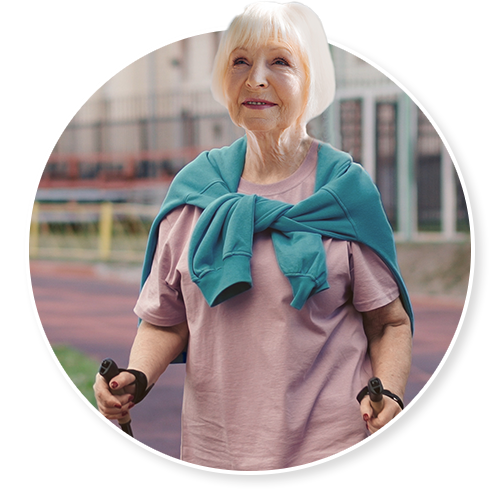
The phone call came at 4:12 PM on a Tuesday.
It was a state trooper, calling from a Walmart parking lot in a town I'd never heard of. “Ma'am, we have a Margaret Kessler here. Is she your mother?”
I dropped my coffee. “Yes — is she okay? Where is she?”
“She's safe, ma'am. She's in the back of my cruiser with a bottle of water. We're in Mansfield, Ohio. She doesn't seem to know how she got here. She has your number on a card in her wallet.”
I sat down on the kitchen floor. Mansfield is sixty-two miles from my mother's house.
That morning, at around 9:30, my mother had gotten in her car to drive to the Kroger four blocks from her house to pick up bread, milk, and a can of cat food for Whiskers. That's it. A trip she'd made every week for the last forty-two years.
Six and a half hours later, she was in another county.
The trooper later told me that a Walmart employee on her smoke break had noticed an elderly woman sitting in the driver's seat of a Buick, engine off, just staring at the steering wheel. The woman had been there, motionless, for at least an hour. When the employee approached and gently asked if she was okay, my mother said: “I think I forgot what I'm doing here.”
That night, after I'd driven six hours round-trip to bring her home, after I'd sat with her at her kitchen table while she shook her head and said over and over “I just don't understand how I ended up there”, after I'd finally tucked her into her own bed and turned out the light —
I sat in my mother's living room and asked myself the question that I'm still asking eighteen months later:
What if next time, nobody finds her?
Most people never connect what's on their plate — or in their cup — to what's happening in their mind. But research now suggests that certain everyday foods and popular beverages — particularly those high in refined sugars, artificial additives, and ultra-processed ingredients — may quietly interfere with the brain's ability to maintain focus, recall, and mental clarity over time. Highly refined breads made from processed white flour, for example, are among the most commonly consumed foods linked to rapid blood sugar spikes — a pattern that, over time, researchers have associated with increased mental fatigue and difficulty sustaining focus.
In addition, certain natural foods traditionally associated with overall wellness have also been studied for their potential benefits to brain health. Honey, for example, contains antioxidant compounds that may help combat oxidative stress, while ginger is often linked to improved circulation and reduced inflammation in the body. Bananas are also recognized as a nutritious food that provides important vitamins and minerals, including potassium and vitamin B6, which play a role in supporting normal brain function and energy metabolism. Although they are not miracle solutions, ingredients like these have attracted growing interest for their possible role in supporting mental clarity, memory, and concentration when included as part of a balanced diet.
On the other hand, some commonly used medications have also been associated with effects on memory, concentration, and mental clarity — especially when used for long periods or without proper medical supervision. Certain medications for anxiety, insomnia, and allergies, for instance, may cause drowsiness, cognitive slowing, and difficulty focusing. Research also suggests that the excessive use of some pain relievers, antidepressants, and medications with anticholinergic effects may negatively influence cognitive function over time. While many of these medications are important and safe when properly prescribed, experts emphasize the importance of responsible use and medical guidance, particularly when symptoms such as brain fog, memory lapses, or persistent mental fatigue begin to appear.
Include these in your diet for cognitive support
Rich in omega-3 fatty acids (DHA), essential for brain cell structure and communication.

Packed with anthocyanins and antioxidants that help protect brain cells from oxidative stress.
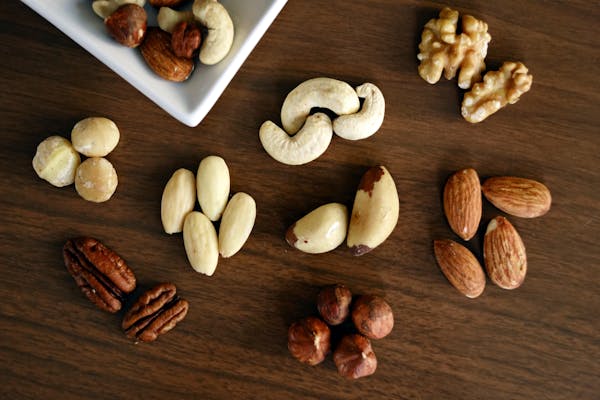
High in alpha-linolenic acid (ALA) and vitamin E, both important for brain health.

Spinach, kale, and broccoli are rich in vitamin K, folate, and lutein for brain protection.

Excellent source of choline, essential for acetylcholine production — important for memory.

Contains flavonoids that may improve blood flow to the brain and support memory.

Contains polyphenols that may help reduce inflammation. A key part of the Mediterranean diet.
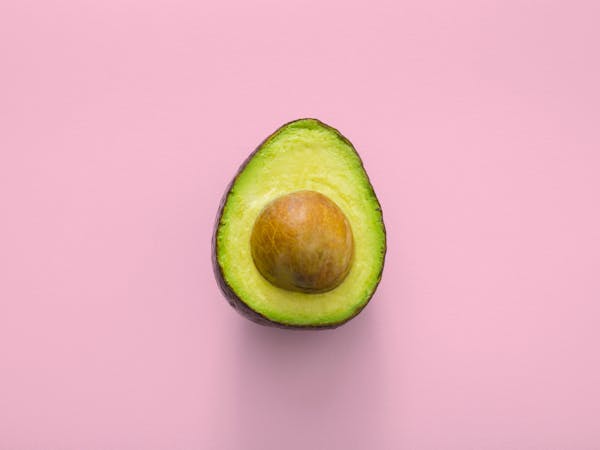
Rich in monounsaturated fats and lutein, which may support healthy blood flow to the brain.

Excellent source of vitamin B6, which supports the production of serotonin and dopamine — neurotransmitters essential for memory, focus, and mood.
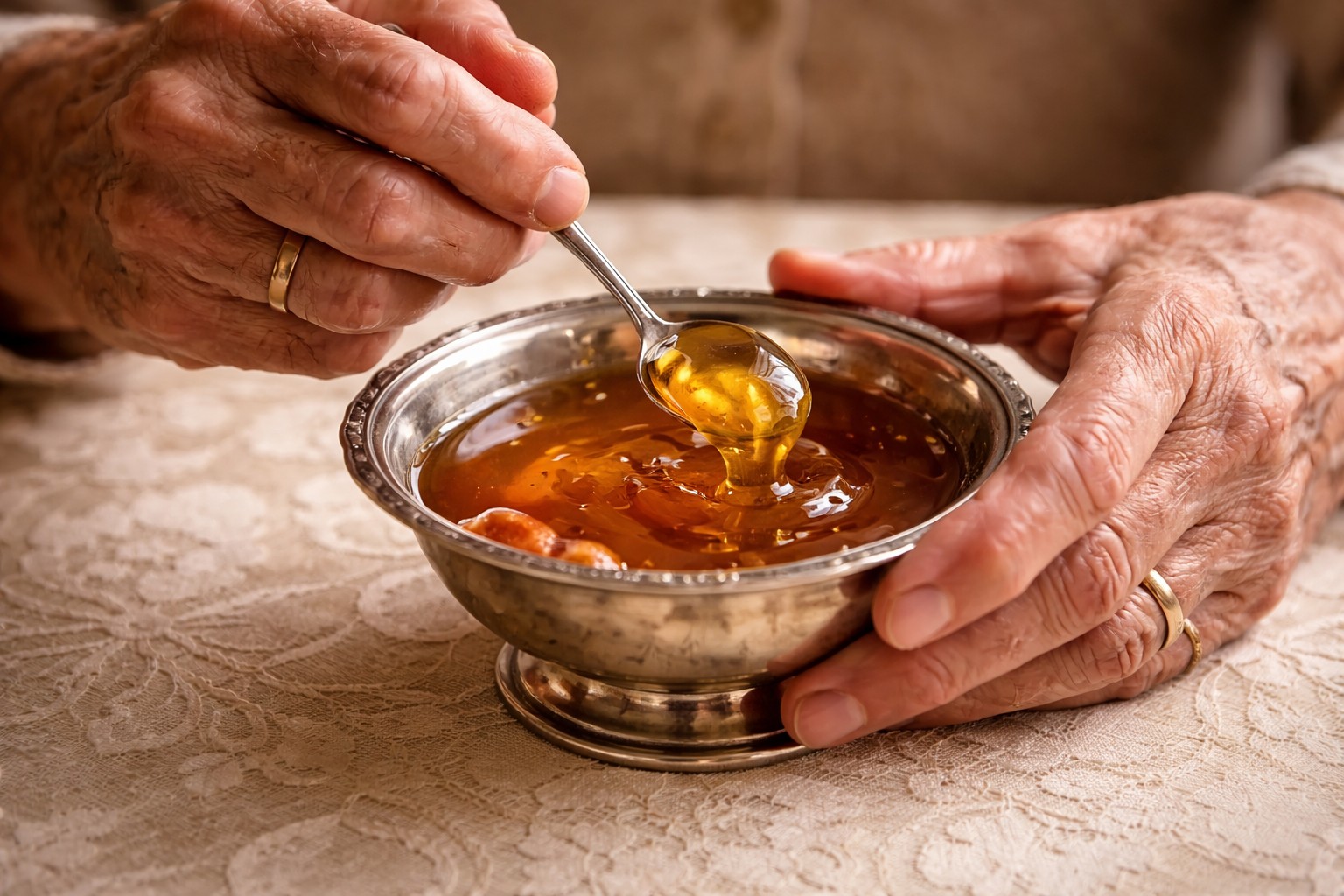
Rich in flavonoids and phenolic acids with neuroprotective and antioxidant properties that help shield brain cells from oxidative stress and support long-term cognitive health.
Consider limiting these in your diet
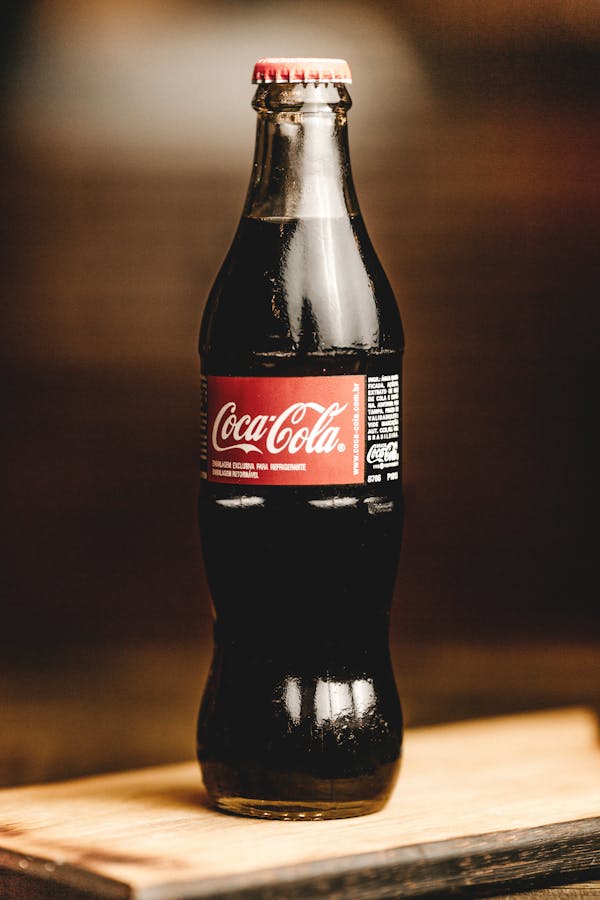
High sugar consumption has been linked to memory problems and reduced brain volume in studies.

May cause inflammation and oxidative stress that can affect blood vessels supplying the brain.

Research has linked regular processed meat consumption to cognitive decline in older adults.
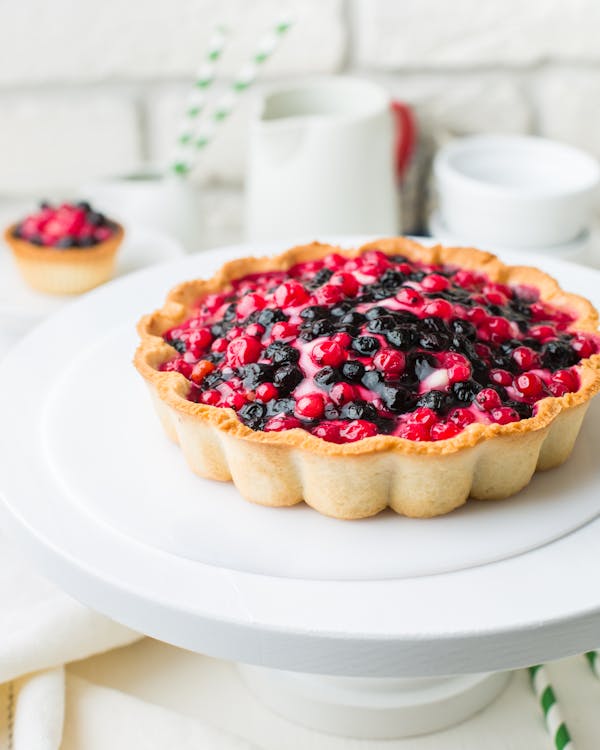
Blood sugar spikes and crashes can affect concentration and may impact long-term brain health.

Heavy drinking is associated with brain shrinkage and memory impairment over time.
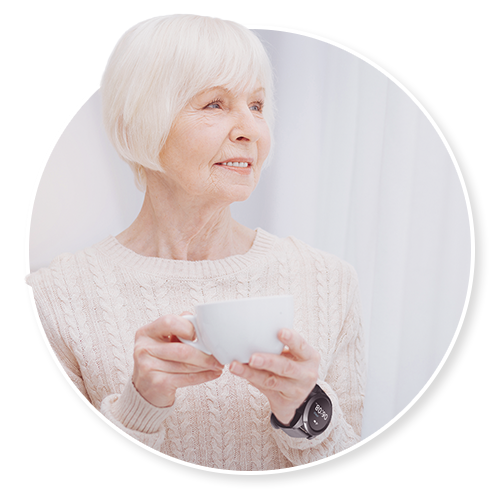
My name is Sarah. I'm 56 years old. My mother's name is Margaret — everyone calls her Maggie — and she has lived alone in the same Cleveland house for forty-two years. The house I grew up in. The house my father built the back porch on with his own two hands.
She doesn't want to leave. She doesn't want assisted living. She doesn't want to move in with me — we tried that for six weeks after Dad passed and it nearly broke us both.
“I have my routines, Sarah. I have my garden. I have my church. I'm not ready to be put away yet.”
And the truth is — she isn't. She still cooks her own meals. Still hosts her bridge club every other Wednesday. Still gardens. Still reads three books a week.
But she's 82. And after the Walmart parking lot incident, her doctor used words that have changed our lives ever since:
Mild memory changes. Not normal aging, but not full independence either. A quiet warning that her mind needs more support than it used to.
Mansfield wasn't the first sign. Just the loudest one.
After Mansfield, I went home and started reading.
What I learned terrified me.
Studies on older adults with significant memory challenges suggest that more than half will wander or become disoriented at least once — and many will do it repeatedly. Wandering can happen at any stage, including the very early stages, when the person still seems fine to everyone around them.
And here is the part that haunts me:
If a wandering senior is not found within 24 hours, up to half of them will suffer serious injury or death. Not from the memory loss itself — from exposure, dehydration, traffic accidents, falls in unfamiliar terrain, or simply from getting too cold or too hot or too lost to be saved in time.
Caregiver safety organizations call this “critical wandering.” Every year, tens of thousands of older Americans become missing-person cases — not because anyone took them, but because they walked or drove away from a familiar place and could not find their way back.
First, the phone calls. I called her every morning and every evening. That works right up until the moment she leaves the house between calls — which is exactly what happened.
Then, the iPhone with Find My. The problem with tracking a phone is that you are tracking a phone, not a person. Hers sat on the kitchen counter more often than it sat in her purse. A phone only works if it's carried — and it gets left behind.
Then, the Apple Watch. This one almost worked. I bought her an Apple Watch, paid the extra $10/month for cellular service, and taught her to wear it. Three problems emerged within a month:
One: The battery only lasts about 18 hours. She had to charge it every single night. She forgot. Often.
Two: She couldn't figure out how to use it. “Sarah, I can't see the screen. The buttons are too small. I keep accidentally calling Carol from my bridge club.”
Three: The Apple Watch wasn't built for somebody with changing memory. It was built for tech-comfortable adults who want a fitness tracker. There were no alerts when she went somewhere unexpected. No way for me to call her if she was lost — she had to call me.
$429 sat unused in a kitchen drawer next to the unused Life Alert pendant my brother had bought her years before.
Then, the medical alert pendant. I tried again. Different brand this time. $49.95 a month, $599 a year, two-year contract.
She wore it for eleven days.
By day twelve, I noticed she'd “forgotten” to put it on after her shower.
“Sarah, it makes me feel like I'm being monitored. Like I'm a patient. I'm not a patient. I'm your mother. I don't want to wear a flashing red pendant around my neck that announces to every visitor that I'm one bad day away from a nursing home.”
That's when I learned a hard truth that I think most adult children don't understand:
Pride is a real safety risk.
Our parents have spent their entire adult lives being competent — raising children, holding jobs, paying mortgages. The thought of becoming someone who has to be monitored, alarmed, watched, alerted… it's humiliating to them. So they take the pendant off. They leave it in the drawer. And then they wander.

I was running out of ideas. I was running out of patience with my own anxiety. I was running out of reasons to believe my mother could keep living independently.
And honestly — that last one scared me more than any of the others. Because I knew how she would handle being told she had to leave her house. It would break her.
Until my sister-in-law Karen mentioned something at Easter dinner.
Karen is a hospice nurse. She's seen everything. When she talks about elderly safety, I listen.
We were on the back porch after dinner. I was telling her about Mom — the Mansfield disappearance, the abandoned Life Alert, the iPhone left on the counter, the unused Apple Watch.
She was quiet for a moment. Then she said: “Sarah, the families I work with don't use Life Alert anymore. Most of them haven't for two or three years. There's a different category of device now — built specifically for people with memory loss.”
I leaned forward. “It's a small wearable that goes on the wrist or clips inside her clothes. Real-time GPS, all day, every day — you can see where she is from your phone any time. If she leaves a familiar route or arrives somewhere she's never been, you get an alert immediately. Not six and a half hours later.”
She paused. “And the part that matters most for someone like Maggie…”
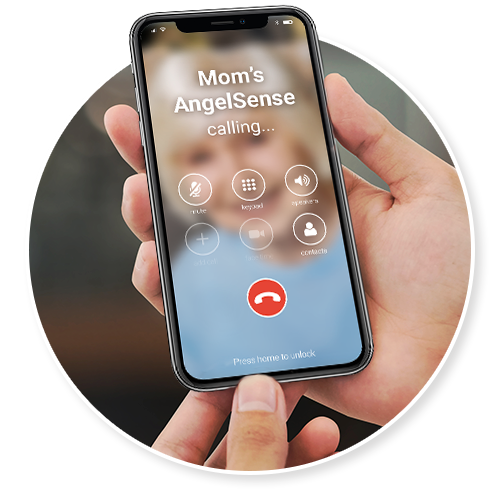
“You can call her on it like a phone, and the device auto-answers without her doing anything. So if she's confused, lost, scared — you don't have to wait for her to figure out how to call you. You just call her, and you're talking to her, through her wrist.”
I felt something in my chest unclench for the first time in months.
“What's it called?”
“AngelSense,” she said. “Look it up tonight. I've recommended it to nine families with a parent showing memory loss. Every single one of them tells me the same thing: they finally sleep at night.”
I sat at my kitchen table with a glass of wine and read about AngelSense for two and a half hours.
It was created by a father whose son was on the autism spectrum and prone to wandering. He couldn't find anything on the market that did what he needed, so he built it himself. Today, the same technology is being used by tens of thousands of families to protect children with autism, adults with Down syndrome, and seniors facing serious memory challenges.
It's the only consumer GPS device I could find that was actually designed for people with changing memory and thinking — not athletes, not commuters, not gym-goers wearing it as an afterthought.
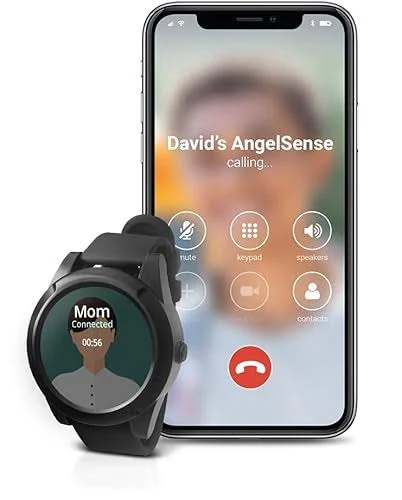
Here's what it actually does, in plain English:
And the company itself: their support team is staffed by people whose own family members use AngelSense every day. You're not calling a script-reading call center. You're calling another family caregiver.
An Apple Watch is a fitness tracker that can also call 911. AngelSense is a wandering-prevention device first, second, and third. Every feature was designed for somebody who may not remember how to use it. That difference matters more than I can explain.
Every other device requires the wearer to press a button to get help. That's exactly the wrong design for somebody with memory loss. A confused person can't troubleshoot a button. AngelSense flips the model: you initiate the call, the device picks up automatically, you're talking to her in seconds.
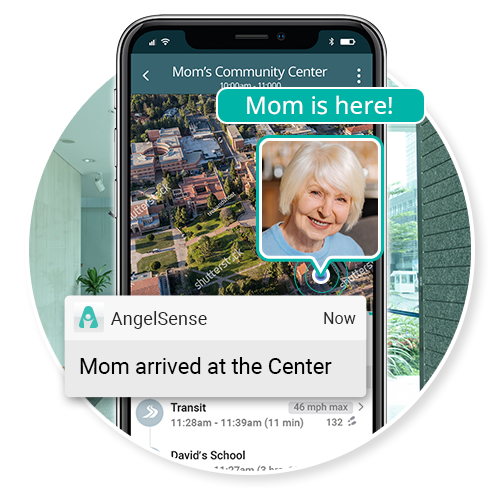
I don't have to sit and refresh the app all day. The system learns Mom's normal patterns — her route to Kroger, her bridge club Wednesdays, her church on Sundays. If she goes somewhere unexpected, takes a wrong turn, or stays somewhere too long, my phone buzzes within minutes. Not hours.
If she walks into a CVS, most GPS devices lose her. AngelSense uses Wi-Fi positioning to keep tracking her indoors — you can actually see what part of the building she's in. The doctor's office. The senior center. Her own bedroom.
My brother Mike, my daughter Lauren, and I all see the same alerts. Whoever is closest or available responds. The weight of caregiving doesn't fall on one person's shoulders alone. If Mike sees the alert before I do, he handles it. If I'm in a meeting, Lauren sees it.
Some seniors will wear a watch. Some won't. AngelSense comes as a clip-on wearable that hides under clothing or as a sleek watch — you choose what your loved one will accept. 95%+ of users actually wear theirs every day. That number is unheard of in this category.
This sounds like marketing fluff until you actually call them. The company hires support staff whose own loved ones use AngelSense daily. When you call about a problem, you're talking to somebody who has lived through exactly what you're going through — not a script-reading call center on the other side of the world.
You set up everything from your own phone. You hand her a watch (or clip a small device into her clothing) and tell her, “This is so I can call you and check on you.” That's the entire conversation. She doesn't have to learn an app, charge a phone, remember a password, or press a button.
Week 1: She Actually Wore It. This sounds small. It is not small. The Life Alert pendant had a non-wear rate of 100% within two weeks. The Apple Watch had a non-wear rate of 100% within four. AngelSense had a 100% wear rate from day one.
I asked her about it after the first week.
“Sarah, it's a watch. I've worn a watch every day since 1962. This is just a more useful watch.”
That was the entire conversation.
Week 2: The First Real-World Save. Mom drove to her bridge club on a Wednesday afternoon. Same drive she'd made every other Wednesday for eleven years. Should have taken her twelve minutes.
Forty minutes after she left, my phone buzzed: “Mom is at an Unknown location.”
I opened the app. She was three streets past Linda's house, parked at the curb of a road she'd never been on.
I called her through the watch. The device auto-answered. I heard her breathing. “Mom? It's Sarah. Are you okay?”
“Sarah? Where are you? How are you talking to me?”
“I'm on the watch, Mom. The new watch. Listen — you're three streets past Linda's. You took a wrong turn somewhere. Can you tell me what street sign you see?”
She read me the sign. I pulled up the map, told her where to turn around, and stayed on the line with her for the four minutes it took to get to Linda's driveway.
Linda came out to the car. I heard them hug through the watch.
Mom told the story at bridge that day. Linda called me that evening, crying, saying it was the most wonderful thing she'd ever heard of.
Weeks 3 and 4: Something I Didn't Expect Happened to Me.
I started sleeping through the night.
For eighteen months — ever since Mansfield — I'd been waking up at 3 AM, every single night, with a cold knot in my chest, reaching for my phone to check whether Mom had called.
By week three with the watch, I noticed I'd slept until 6:15 without checking my phone once.
I told my husband Tom about it at breakfast.
“You've been sleeping different,” he said. “Quieter. I noticed last week. I didn't want to say anything in case I jinxed it.”
I didn't realize until that moment how much weight I'd been carrying.
“Dad walked out at 2 AM. We had him home in 45 minutes.”
My father has been showing early-stage memory loss and lives with my mother. One night he got up, got dressed, and walked out the front door at 2 in the morning. By the time my mother woke up at 5, he'd been gone for hours. Without AngelSense, we would have called the police and waited. With it, we opened the app, saw exactly where he was — sitting on a bench at a 24-hour CVS three miles away — called him through the watch, and my brother picked him up. He was confused but unharmed. I cannot put a price on what that night could have been without this device.
“Finally, something Mom doesn't take off.”
We tried Life Alert twice. Mom (77) refused to wear the pendant after a few days each time — said it embarrassed her in front of friends. She wears the AngelSense clip-on inside the waistband of her pants and forgets it's there. She's had it on for four months straight. The day she got disoriented at the mall, I called her through it and walked her to the food court where my husband picked her up. She thought I was a guardian angel. I almost cried.
“Our whole family carries the weight together now.”
I'm the primary caregiver for my mother but I have three siblings who all live in different states. Before AngelSense, I was the only one who would get the panic call from a neighbor. Now we're all guardians on the app. My sister in Seattle handled the last alert because she happened to be checking her phone first. The mental load shifted from one person to four. That alone has saved my marriage.
“The first time I called her through the watch, I cried.”
I'm an only child and my mother lives 600 miles away from me. The first time I called her on the AngelSense and heard her say “Hello?” without her having to know how to pick up — I sat in my car in the parking lot and cried for ten minutes. I had carried that fear of not being able to reach her for two years. It lifted in one phone call.
It's a fair question. The answer is uncomfortable but simple:
Life Alert spends an estimated $35 million a year on television advertising. Their commercials run during daytime news, soap operas, and game shows — the programming that reaches frightened seniors and their adult children. They have an enormous voice in the marketplace because they have an enormous monthly-recurring-revenue business to defend.
AngelSense started as a project by a single father trying to keep his autistic son safe. It grew through word-of-mouth in caregiver communities — autism support groups, memory-loss caregiver forums, hospice nurse networks. You hear about it from your sister-in-law the hospice nurse, or your friend whose mother just got lost, or an article like this one.
The medical alert pendant industry collected over $8.4 billion in subscription revenue last year. A device that actually works for people with memory loss — that solves the “wandering” problem instead of just monitoring “falls” — is an existential threat to that business model.
Read that again: the device that actually works for the modern memory-loss care reality is rarely the one being advertised on TV.
| AngelSense | Apple Watch | Life Alert Pendant | Find My iPhone | |
|---|---|---|---|---|
| Designed for memory loss | Yes — built for it | Fitness device | Falls only | Generic tracking |
| You can call HER, auto-answer | Yes | She must accept | No | No |
| Wandering / unfamiliar-place alerts | AI-powered | Manual geofence only | No | Manual setup |
| Indoor location tracking | Wi-Fi based | Limited | No | Limited |
| Multi-guardian / shared family alerts | Built in | Family Sharing | One contact only | Family Sharing |
| Worn even by users with memory loss | 95%+ wear rate | Often abandoned | Frequently refused | Phone left behind |
| Support staff are family caregivers | Yes | No | Call center | No support |
It came through the AngelSense app. She had figured out the SOS button entirely on her own — not for an emergency, just to try it.
The recording was thirteen seconds long. “Sarah, this is your mother. I am at Linda's. We are eating sandwiches. I love you. Goodbye.”
I was in a meeting. I read the alert, listened to the voice message, and excused myself to the bathroom for ninety seconds.
That little message is everything I have wanted for the last two years.
Not the absence of my mother getting confused — I can't prevent that. Memory loss happens. Eighty-two-year-old brains do eighty-two-year-old things.
What I wanted was the certainty that if she got lost, I would know. Immediately. Not six and a half hours later when a stranger noticed her in a parking lot.
I think about all the things I tried before this — the calls, the iPhones, the rejected pendant, the unused Apple Watch, the $1,800 my brother gave to Life Alert for a service my mother refused to wear. I think about Mansfield. I think about all the parents and grandparents who didn't get found by a kind employee on a smoke break.
And I think about every adult child I know — my brother, my friends, my coworkers, every person I've had a quiet kitchen-table conversation with about an aging parent — who is exactly where I was two years ago.
If you're reading this, and your mother or father lives alone with even the early signs of memory loss, and you've been telling yourself “there's still time”:
There might not be.
I waited eighteen months. We almost didn't get her back. Don't wait.
Comments are closed.
Janet M.
My dad walked away from a family gathering last Thanksgiving and was missing for three hours before we found him. He had no idea where he was. I read this article twice and ordered AngelSense the same day. Wish I'd had it back then.
Like · 112 · Reply · 2d
Sarah Kessler
Janet — I'm so sorry about your father. The fear of those hours is the part nobody talks about. I'm glad you ordered one.
Like · 37 · Reply · 2d
Robert T.
I'm a retired EMT. The number of “found wandering” calls I responded to with elderly patients who'd been gone for hours… you would not believe. Most of them were not found by police — they were found by strangers who happened to notice them. A device that alerts the family within minutes of a wrong turn would have changed dozens of outcomes I personally saw. Glad to see this technology finally accessible.
Like · 204 · Reply · 3d
Paul E.
Question: my mother refuses to wear a watch. Does the clip-on really stay hidden? Worried she'll find it and take it off.
Like · 28 · Reply · 4d
Diane V.
Paul — we use the clip-on for my husband. It goes inside the waistband of his pants. He's never noticed it in 6 months. Hope that helps.
Like · 52 · Reply · 3d
Carol M.
I cancelled the medical alert pendant subscription this morning. Three years, almost $1,800, and Mom hadn't worn the pendant in two of them. Switching to AngelSense. Wish I'd done this sooner. Thank you for writing this.
Like · 168 · Reply · 5d
Eleanor B.
I'm 71 and in the early stages of memory loss myself. I bought one for myself before my kids could nag me into something I'd hate. The fact that they can call me through it — and I don't have to do anything — is the part that made me say yes. I get to keep my independence. They get to keep their sanity. Good product.
Like · 137 · Reply · 6d
David H.
My mother-in-law has early-stage memory loss and has wandered three times in the last year. We've been on AngelSense for four months. It has alerted us twice. Both times we got her home within twenty minutes — one of those would have been hours otherwise. Every adult child of an aging parent should know this exists.
Like · 152 · Reply · 1w
Margaret G.
Sarah — this article made me cry. My mom is 84 and lives 600 miles away. I've been losing sleep over exactly this. Thank you for writing what so many of us have been feeling. Ordering one tonight.
Like · 108 · Reply · 1w
Sarah Kessler
Margaret — thank you for sharing. We're all in this together. Hug your mom for me.
Like · 59 · Reply · 1w